Speaker: 00:03
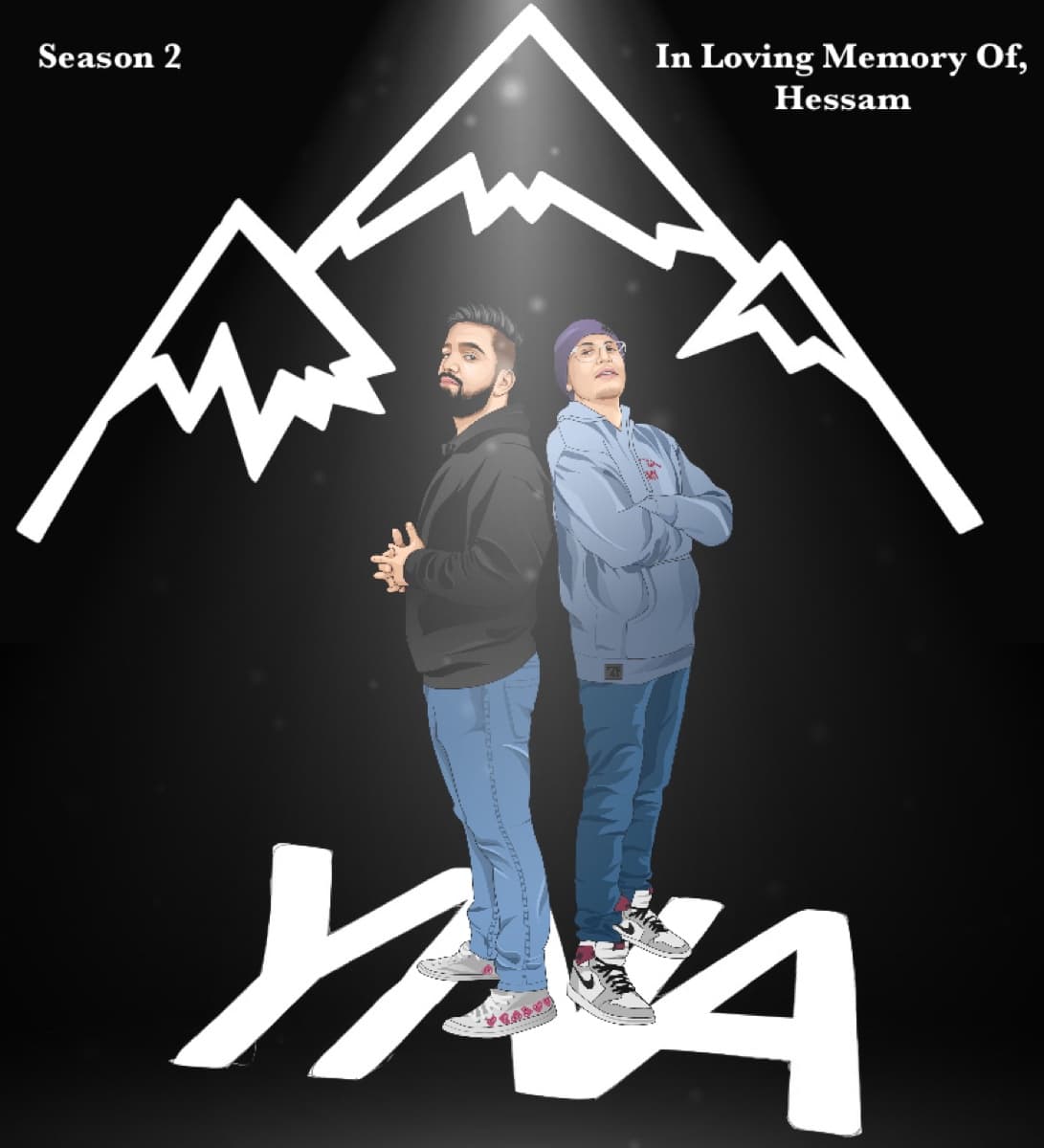
YNA is a podcast that focuses on mental health and other aspects relating to what goes on inside a person's head. We are by no means professionals on this field and only aim to make these conversations about mental health easier for the listener. Nothing we say or talk about is professional advice unless explicitly mentioned. If you seek professional advice or experience symptoms of an actual mental health disorder, please contact a professional or visit your closest center for behavioral health. You are not alone. Daniel, would you like to introduce yourself?
Speaker 1: 00:39
Sure, yeah. My name is Daniel Ethan Bassa. I'm a senior at Eckert College in St. Petersburg, Florida. And uh you can follow me on Instagram at Daniel B. Basa. Uh I do a lot of animal photography and a lot of wildlife stuff. I'm an environmental studies major with business minors.
Speaker: 00:58
That's awesome, dude. So we could just jump right into it. ADHD has been something that I've realized a lot of people deal with and they struggle with, and they're not very sure on how it all started. So I gotta ask you, when did you know you had ADHD? And did you know? And when did you say to yourself, I need to take the steps to go forward and get the help that you needed?
Speaker 1: 01:22
Yeah, so I uh yeah, I didn't know at first. Uh so around first grade when I was in elementary school in Illinois, I just was really struggling in school, couldn't meet deadlines, couldn't and and I even even that school had a more accommodating like academic structure for ADHD. But even then, um, I was like struggling to meet deadlines, always distracted. You know, a lot of teachers thought I was lazy, and you know, and I mean, see, we were in the same class, so I don't know, you probably don't remember, like you were probably in third grade, but I would get no work done. Like I would just kind of like walk around, just kind of like looking out the window and stuff. And you know, everybody's always wondering why I couldn't get any of my work done. And eventually um, I went and got tested for ADHD because a lot of people thought I was lazy and stupid. And you know, I think my parents at that point were just looking for an explanation. And I gotta say, I I know that that was arguably like a huge relief for my for my parents when they found out there that there was something and there was like a fix, and I wasn't just dumb or stupid or lazy, you know. And so yeah, I found out around probably third or fourth grade wasn't my official diagnosis. And then, you know, uh we tried a lot of like like psychologists and therapists and stuff, and you know, I think the one that started to work was around fourth grade, and it was somewhere I don't remember where it was, but it was someone who also it was a it was a psychologist who also had ADHD, and I think that helped me a lot like learn like coping skills from somebody who had to do it themselves, you know.
Speaker: 02:54
So was the connection with your therapist really important to you? And did it allow you to keep going and like understand that this is something that everybody uh that not everybody, but a lot of people do deal with? Because I think that's the problem. Like we realize is when you do make a connection with a therapist with something that you are dealing with, I feel like it makes people a little bit more comfortable with who they are and what they're dealing with. And so that because they know that somebody else understands what they're doing and what they're going through. Because I feel as if if you can't find somebody who understands what you're going through and what you're dealing with, you lose this sense of like, oh, like me and that other person are the same. You feel as if like you're not normal and that nobody else deals with it.
Speaker 1: 03:37
So I I understand what you're saying. Fortunately for me, I was pretty young and and honestly pretty unaware and pretty naive. And so for me, it was mostly just someone that I could relate to. I don't remember his name. I want to give him a shout out. Um, because my mom and I actually talk about this a lot. That that guy was like, you know, he was the one that that really understood and gave uh a more like more concrete tools than just stay focused, you know. Um, yeah, so yeah, for sure. It's like super relatable. It was more um, it was less therapy and more looking at and trying to find coping mechanisms. I think that's that's the biggest part. That's the biggest way to combat, I mean, any sort of mental illness or anything is just finding ways to not ignore it or completely cure it, but but finding ways to live with it.
Speaker: 04:25
So with these coping mechanisms, could you help um our listeners that who may deal with ADHD or not sure if they deal with it, some things that you did that helped you become like understand your ADHD better? Well, the first thing I would say is to get tested.
Speaker 1: 04:40
Um if you especially when you're young, if you're if you're listening to this and you're younger and you're especially in like a school system that kind of swallows you up and you feel like you can't keep up and all that, I think the first step, real concrete step is a diagnosis. And obviously, I'm not I'm no expert. This is just my path to success, was definitely that that first diagnosis helped a lot because that that opens up the door for you know testing accommodations because people with ADHD, we don't test as well as other people, like standardized testing and stuff like that. And a lot of that is applied when you're younger. Um learning that when you're younger is absolutely vital. But yeah, so as far as coping mechanisms, for me personally, with especially after the diagnosis, eventually I was medicated, right? And and you know, that's a whole nother story. But I would say now as a college student, um, and I was just telling my roommate this the other day, the way that I deal with, you know, let's, for example, getting distracted, right? I like kind of hard, like concrete steps to to change rather than just going for change itself, making sure that I have like a list of things I'm gonna try to accomplish in that order to kind of keep myself accountable. So for me, who gets distracted, I'll go to the library, right? So the step one is removing myself from an environment that is inherently distracting. I think the next step though is the library isn't enough. If I go into a study room, I'm gonna be watching a video on my phone, I'm gonna be texting, doing all that. So my thing now is I sit in the common area in a library so that people can see me. Like I can't play a video, I can't do anything that distracts me, and I sit in that common area. Next step after that, if I still can't focus, phone gets turned off and put away. And I think that it's about knowing, like and being honest with yourself about your own distractions. And because I think for me, like I have ADHD, um, inattentive and hyperactive. So that's both. Um back then that would have been called ADD versus ADHD, right? But now it's inattentive, hyperactive. Um I have both, but far more on the inattentive side now. I think a lot of people when they get older, the hyperactivity goes away with the inattentiveness, it's there. Like, and I, you know, another another big thing I do, uh sorry if I'm rambling, is um the um like scheduling. I I like to try to keep a routine or at the very least keep a to-do list because uh like with ADHD, I forget a lot of things. And so I like to have like a list of deliverables for myself by the end of the day. And so if I forget, if I make a habit of checking this list every hour, every two hours, then you know, that I there's no possible way I can forget. The only thing is put remembering to put something on that list, but you know, right, right.
Speaker: 07:25
And so I gotta ask, like, as a kid growing up, like you must have evolved with this mental disorder, right? Like you pretty much evolved with the life of ADHD and understanding how to cope with it and understanding your own distractions. And you're right, like I believe not enough people are honest with themselves these days and they tell themselves lies just to make themselves feel better or to understand that I'm not trying to go down that road or deal with that kind of problem. So for you to be honest with yourself and realize that hey, my phone is a distraction, or the library is the best place and the common area is the best place for me to go. Um, so how did you come to that uh evolution? Like, was it something that like you just clicked one day and you just understood, or was it like building blocks and you slowly got an understanding of it? Um on top of that, when did you realize that? When did you start being honest with yourself? And because like you must have lied to yourself in the beginning and then stopped.
Speaker 1: 08:23
You know, unfortunately, I don't I don't think I like I don't know if I lied to myself. I just to answer the second part of your question first. In this case, I really have to credit my parents, especially my mom, to one give me the access to these like professionals that can help me. Um, because then I ended up seeing another therapist who is still my therapist now. Um when around when I was around sixth, fifth or sixth grade. And she helped a lot in like learning coping skills. But I think for me it was I didn't I was always kind of told that I was being distracted. I think my my family's very on top of me when it came to especially schoolwork um when I was younger, right? And and so in that case, I'm very grateful for that. At first, when I was younger, it was them keeping me accountable for my work, and then it was them teaching me to be accountable for my work. And by the time I went to college, I was accountable for my work. And I think that like the environment I had at home was very conducive to accountability and like getting my work done, especially like in a distraction-free setting and all that. But I think when I got to college, I I had like a good three months where I struggled in school again, you know, and I eventually figured it out about my sophomore year and with the help of some mentors too. And I and now I think that it's like I I had to take kind of a long look in the mirror and be like, these are the things that are keeping me from the success that I want to achieve. And I I've been taught growing up the steps to get to where I want to be. So now I just have to do it.
Speaker: 09:57
Um so it sounds like with ADHD, you kind of just focused on it was all about school. Was there any point in life where ADHD affected like your living and like other aspects that weren't school?
Speaker 1: 10:10
Yeah. Um part ADHD and like forgetting things like that, I'm so messy. Uh like my like my room was always so messy growing up, and that's something that I'll be honest with you, in the spirit of not lying to ourselves, that is the thing with ADHD I struggle with the most still, is like organization. I think that especially academically and like business-wise, and especially even my hobbies, I'm very meticulous, very organized. Because I think a lot of I have like a very high functioning form of ADHD where a lot of people just won't see it in like a work setting. But the second like you live with me, you'll you'll notice these things. And like I won't lie, my room my room's not the cleanest. But I think that that's that's a part of my life that it has affected. But I gotta stress that like and maybe we'll touch on it later. ADHD is not always a bad thing. I think for me, I struggle so much in the traditional confines of like just traditional school and traditional academic success that I had to look elsewhere for that, especially younger. I I never got like great grades. I mean, even when we were younger though, we didn't have grades, but you know, you know what I'm trying to say. Right. But I I never succeeded like some other the kids in our class. Like, do you know what I'm talking about? You know what I mean? Like, there's some kids in our got it. You know, and and a lot of them were our friends who just did so well in that academic setting. And I had to look elsewhere for that. And for me, where I found that, especially like in my middle school years was videography. And like you know how like I mentioned earlier with ADHD, you you're so overstimulated, you see everything, every little thing. Like it feels like you step into a field, and a normal person would be able not to say ADHD is not normal, but like someone without ADHD would step into like a field of grass and be like, Oh, this is just a field. But then with me, I would say, okay, but there's there's certain like dandelions over there, there's certain things happening. I can hear something, and all of that overstimulation kind of lends itself to greater creativity. So, in that in that sense, ADHD affected my life in a positive way, if that makes sense, you know.
Speaker: 12:18
And I think with uh mental disorders, I feel like at a point you realize that a mental disorder is a part of you, no matter whether you try to get rid of it with medication or whatever, it will always be part of you. I don't I've never believed that a mental disorder can be completely cured and treated. I believe that with mental disorders, you you grow with it and you evolve with it, and it's kind of like a learning process through the whole thing. I've never looked at mental disorders as a bad thing. I think in the beginning I did just because of the things that I saw and the things and how it affected me. But now that I've evolved with it, and I feel like as you get older with a mental disorder, you slowly become like a different person with it, and you kind of both growth grow and you kind of go through things in life. And now I can easily understand when I'm depressed or when I have a PTSD episode. Like I can understand where I am in that moment and how to deal with it and how to become better, or even use it to your advantage. So let me ask did you ever were you ever able to use ADHD to your advantage? For sure, for sure.
Speaker 1: 13:21
I I think that uh I don't know how to say it, like with I'm sure whoever's listening to this can notice I I'm all over the place. And I think that sometimes that is a disadvantage, but in other cases, that comes across as passion. And I think that I at the end of the day, I'm a very passionate person. Like I like I go through, like we joke about it in my family, I go through a lot of phases. You know, I had a free diving phase, uh, a reptile phase, uh even a hippie phase at one point. But but I think that like every time I do something, I I commit 1000% into it. And and because I'm so like distracted and so kind of energetic and even impulsive sometimes, it comes across as passion. And I think that that's that's well while unchecked, that can be dangerous. I think that a lot of people tend to believe in the things that like I want, like, like if I'm like if I have a project or something, they tend to believe in it because they can see that I believe in it to the extent that I do and and the energy that I bring to that. And I think a lot of that has to do with my brain just working differently than some other people, you know.
Speaker: 14:27
And I and I completely understand. So I'm gonna go down the I think one of the most difficult routes, which is the medicated side of um the mental disorders. And I personally have a whole different aspect of a view on um medication, especially where it's to the fact of whether you need it or whether you don't need it, or you can find different ways to deal with it. Like there's many different ways, but going down the medicated route, um, were you somebody who finally realized that the medication really does help and it really pushes you? Or are you still like in an aspect in a view of the medication where like you could deal without it now?
Speaker 1: 15:06
That's a good question. Um, I think in high school I took took the medicine every day, right? Uh I I take two, one long acting, one short acting. And um for for the high school structure, yeah, I mean worked. Like I was focused, I maintained focus throughout the day, and then I would get take a booster dose in the evening. And yeah, it really helped. Like you can you tell you really can't tell a difference like when you take it. Like I it's not like a slight, it's a huge difference, but I think now in college I've needed it less, I will say, which is maybe because of the structure of my classes, and I'm learning about things that I'm genuinely engaging with in class. You know, it's hard to sit through 45 minutes of algebra if you hate algebra. But here I I mean I'm studying, I I'm in a class about like I'm in a fisheries governance class. So I talk about policies and in managing fish populations, and that I mean that's that's what I want to do, you know. That's what I want to do in life. So so no, I I don't take my meds for that class. And on days where I have that class, I I don't take it just because I don't need it. But overall, um, it does help me maintain focus. I will say the uh I'm not as dependent on it anymore, but on the other hand, I've started to notice the effect that the medicine has on other aspects of my life outside of academics. Because I think when you take it when you're in school eight hours a day in like high school, then you're you know, like you're maintaining focus, you kind of have one goal throughout the day, and that's you know, do well in school and get through the day. Whereas in college, when you're in class for I mean, I've got three days off a week. So, like, and that's not including weekends. I or no, I only have class for three days of the week. So if I take medicine on days where I don't have class, or even the the classes that I have are only three hours of the day, I've started to notice the effect that it has on the non-academic parts of the day, in that like it does increase my anxiety a little bit, suppresses appetite. And the main part is the anxiety, and it and for the most part, it's been manageable. Um, now that my anxiety is a little lower, and I think that like exercise helps a lot with balancing the side effects of medication. I've noticed on days that especially that I do cardio, I'm able to manage the anxiety, the spikes in anxiety that come from my medication. So yeah, medication and I have have a have a weird, have a weird relationship. I think I'm still in the bounds of it being healthy, but I think that I'm getting to the point and become more aware of identifying these side effects as anxiety, you know.
Speaker: 17:36
So I've I've spoken to a lot of people on this podcast and I've explained that in in aspects of disorders play hand in hand. And so, like my depression plays hand in hand with my PTSD, like one punch is left, one punch is right. With your ADHD. Yeah, exactly. Like, how do you feel? Do you feel like your ADHD punches left and something else punches right? Um, do you deal with anything else that has a bigger aspect with you?
Speaker 1: 18:02
Yeah, so yeah, I I do feel that my ADHD does contribute to other things that I struggle with. Um, one on one hand being anxiety, and then on the other hand being this is the most recent one is depression. That that's a very, very recent thing for me. And I mean almost almost a year to the day where I I think the official like I don't want to say diagnosis because I don't I don't know if I have any paperwork, but uh, we're just talking about therapies and like these are all the symptoms of like depression, you know. And and and throughout the last year I've I've like really worked through that in a way that I feel like I am the happiest I've been while also being the healthiest. Because I've had other amazing, happy moments in life, but I think now is the healthiest and most self-aware I've ever been mentally. But yeah, no, for sure. Um yeah, I I think it's it's it's anxiety and depression. I think well, and those two things. I mean, I'm sure like you know that those two things go insanely hand in hand, but yeah, I I think that like the for the most part, it's the anxiety. I think the anxiety is what induces depression for me, and and it's all about the management of anxiety, right?
Speaker: 19:10
And exactly, and you find different ways to manage anxiety and how to really bring it into like a better perspective in your life. Like you said, HD ADHD didn't have the best in the beginning, but once you got a good understanding and foreground of it, you used it to your advantage to create that passion.
Speaker 1: 19:27
I was just gonna add, in in a way that ADHD has helped, and this is kind of gonna crack you up, I think, just based on the conversation we had right before the pod started. Another way that ADHD has helped me is I've felt or stimulated my entire life. I've been in situations, especially with my anxiety, I feel like I don't want to say danger, but like like overwhelmed. And I've learned to be not comfortable, but I've learned to manage that overwhelm, you know, feeling. And now when I do all the animal stuff and when I do like venomous snake work and I handle dangerous animals, that feeling of being overwhelmed and learning how to cope with that has really helped me. So while being distracted and holding venomous snake probably isn't the best thing in the world, I think in that sense I've been able to like, I think maybe that's a thing that sets me apart from with the wildlife thing. Because I think that like the people that I hang out with who do all the wildlife stuff, we're all the same, all have ADHD. Like, I'm not exaggerating, my entire group has it, and I think we all probably feel the same way.
Speaker: 20:31
And that's amazing that you guys you found a little group for yourself and you kind of all understand what you guys are dealing with and how to deal with it honestly together. Because honestly, talking about your disorder with other people, you get an understanding again. It's that feeling of connection that you have that us human beings. That yeah, exactly. Us us human beings, like the one thing that we need in our lives is um emotional connections. Like we thrive over connecting with another human being, especially if it's something that you've dealt with for so long, and you kind of get this understanding together. So I'm gonna throw five myths about ADHD towards you. Um, just give me give me quick responses to them and let me know what you think. So the first myth is ADHD isn't real, or at least it's overdiagnosed.
Speaker 1: 21:14
In my opinion, I completely think it's underdiagnosed. You know, I was talking to one of my friends here, let's say, um, who's who's a bit younger than me um in college and very new to college. And we were talking the other night, and he he was like, I don't have ADHD. And I was like, Okay, um, so what what's hard when you sit down to do your work? He was like, Well, I'm distracted, like my mind races, like I have have a hard time finishing things after I start them. And I was like, Oh, homie, uh, it sounds like ADHD. Tell me more. And I like, we talked about it. He checked every box. And at the end of the night, he was like, Oh, maybe, maybe I have ADHD. And so, um and so, and that was I'm I'm not even kidding. That was two nights ago. And so I totally think it's underdiagnosed. And so I think that is an extremely antiquated view. And that's why you said it's it's a myth, right? It's a completely antiquated view. And I think that like the more that we learn right about people, I think the more we're gonna find that there might be more people. This you can fact check me on this because I don't know, but it feels like, at least in my life and in my social circles, that there's more people with this than without it. Because it's not like it's not like COVID, you can't have it or not have it. You have different degrees of it, and certain people seem like they're an absolute mess. And other people, and this is the more dangerous one, other people seem completely fine. And I think that's where a lot of people, the discrepancy with me in class and me in like business situations, and me like Daniel the Daniel the student, Daniel the guy who's doing a project in the Philippines, all that, he's a very high functioning person. But I think the people closest to me who are seeing me like fall apart were seeing the that I think that's so dangerous to to not to go undiagnosed, you know what I mean? And I think that's why I'm I'm the first step. I honestly think if you have to get you and you're struggling enough, like get get tested. Like that's that I mean that's that was what changed my path, you know.
Speaker: 23:17
We got the second one ADHD is a childhood disease.
Speaker 1: 23:22
So I could see even me, I could see how people would think that. Because I think a lot of people think that they can just outgrow it, and I think you can, it's you're not gonna be cured, but I think you can outgrow it in a way that you learn coping skills. I think some people may naturally learn those coping skills. Unfortunately, I I wasn't one of those, or maybe fortunately, honestly, because I had to work really hard to learn those things, and and I'm on me because of my work ethic, but like, yeah, no, not not a child, I think. I'm 22 and I've definitely got it.
Speaker: 23:55
Okay, so the third question is the third one is all people with ADHD are hyper.
Speaker 1: 24:01
Yeah, like something we touched on earlier. I know, right? Because we we obviously know that you and I know that that's not true, but I think that when people think ADHD, they think ADHD in the old test, because I think um I don't remember um the actual psychology, like legislation that or what not legislative or like whatever changed, but they changed the the name for for ADHD. It used to be ADD and then ADHD, ad being inattentive, ad HD being hyperactive, right? And like I said, it's it's a scale. You could be on a scale of 99 inattentive and one percent hyperactive, but you've still got ADHD, right? Exactly. Or you could have or you could just have hyperactivity. It it it's just it's a scale, and I think that um when people associate hyperactivity with ADHD, you're you're generally the picture in your head is the kid in class who can't sit still, fidgets, and that was me. I struggle with that less now just because I do purposely like try to avoid those things, like try to try to like make sure I'm sitting still and presenting myself in the right way, and I've learned to make a conscious effort. But I think that um that yeah.
Speaker: 25:10
Okay, so we got the fourth one. ADHD medications are dangerous, and that's a myth.
Speaker 1: 25:17
Yes, well, I I gotta say they can be dangerous. Okay. Um, well, I mean, we've we've both been to college. Yeah, how many people you know who abuse ADHD medication? Oh, a lot of people, a lot of people, and a lot of people, and the amount of people, and I gotta say, the amount of people that hit me up when they find out that I have medication, it's kind of awful. Wow. Because I need that. I need exactly that's that's mine. Like, take the break in the law part aside of that. That's mine. Like, like, you know what I mean? No, I get what you mean.
Speaker: 25:49
I get what you mean.
Speaker 1: 25:49
And and and and and it's I have a heart condition, right? Right. And I I don't think you know that. I have a heart condition, and we had to go jump through so many hoops because there are so many side effects. So I don't think it's a fair statement to say that ADHD medications are dangerous. I think it's a like I think it's a fair assumption to say ADHD medicine unchecked, especially for undiagnosed and abused, are a thousand percent dangerous.
Speaker: 26:16
Right, exactly. Like it with any drug. Um with the fifth and the last question, ADHD has to be a barrier to success in this myth.
Speaker 1: 26:26
I love that you just asked me this one because this is something that I mean, you and I have talked about this recently. I mean, think about when we were younger, how many people and especially teachers like looked at us and just you could tell they didn't believe and they thought that we were and maybe and maybe you don't have ADHD to be do you know what I'm saying? Counted us down, counted us down. We were we're just people who really counted us out and wrote us off. And you know, I even talked to my mother about this. Like people see people really counted us off when we were kids, like and to be where both of us are today is insane to me.
Speaker: 27:01
Exactly, right?
Speaker 1: 27:02
We have to prove to them that we are absolutely not. I just wanted to add that like for me, I think a lot of people can see ADHD as a barrier to success, and I'm lucky enough to have the guidance and and to have the tools to be able to learn those coping skills. But ADHD made me work my ass off. My I've like for so much of my childhood too, I was like in the trenches, right? Like, oh, and and and it comes down to it was coming down to academics always, and to learn to struggle like that. Like once you, I think once you not beat that, but I think once you've learned to achieve a certain level of control and success over that, then you can apply that to anything. And I think in a way that in the things that you had to fight through, you have achieved so much in your field, and I I'm proud to say so have I in mine, you know.
Speaker: 27:54
And that's what you can say. I and I think that's the most beautiful thing about the whole thing is like I've dealt with this, I've experienced the lows and the highs, but in the end, no matter what, whether it did hurt me or better me, I'm here today. I love what I'm doing. I'm I'm I can say that without my depression and without my PTSD, I would not be here where I am today because it's pushed me to fight and strive and motivate myself even harder than I've ever done before. Because I always felt like I had a step back from everybody. I was always behind everybody, that I didn't have the capabilities and uh opportunities as they did because I've dealt with different things. But I think the most beautiful thing about the whole factor of having a mental disorder is that like you grow with it, you live with it, you and you will die with it. It's it's like it's like no matter what, whether you try to get rid of it or cure it with medication or whatever, no matter what, it's still in your head and it's something that you did deal with. But if you can stand up and say that you're proud for who you are and what you did and what you had, then dude, like I like all the power to you. Like that's I feel like that's that's when you have full control over it. So before we turn before we get off this podcast, let me let me ask you one last thing. How if if if you were a kid right now listening to this and you had no idea whether you did have ADHD or not, how would you help them push themselves to go get the diagnosis? Or how would you give them tips to help them get better?
Speaker 1: 29:27
Well, so let's say the audience that we're talking about is someone that, like a kid that thinks they have ADHD. Because I think that's the first part, right? If you let's say are struggling with things that might be ADHD and you're I think you're the parent of this kid, you oh, you know, I you don't want that kid to live with that stigma. You don't want, you know, you know what I mean? Like there's still like this ooh, ADHD around around like that diagnosis or whatever. I think I mean I'll brag. I think I'm the perfect example. Well, how many kids, how many adults do you know that said what they wanted to be when they were a kid and did just that? Because I did that, right? And and I did that because I had to confront the thing that might have been holding me back when I was a kid, I had to confront that head on from the time I was what, like how old are you in fourth grade? Like 10? So to be, and and I think that's my proudest accomplishment for myself is I I became what I wanted to be. And I think not a lot of people can say that. And I think that that's like that's those kind of people I surround myself with here too, you know. And I go to a school that's mainly marine biology. How many kids when they're how many people when their kids say, I'm gonna be a marine biologist? How many people do you know who actually did that?
Speaker: 30:39
Right.
Speaker 1: 30:40
And I go, I go to a school with people, a lot of people like that. And I think that that's that's the biggest part is that like to anyone like not even a kid, to anyone who thinks that they have it, like as hard as it would be, and I remember how hard it was for me to embrace it, like there's no running away from it. The long fact, the longer you put it off, the faster it's gonna catch up to you.
Speaker: 31:02
Right. I 100% agree with you. I think that's the factor of like the the more you push it away, the more it creeps right behind you and waits for you to finally be like, hey, I do have this. So again, yeah, I want to thank you for coming onto this podcast, for explaining everything that you've dealt with. I really appreciate it. And I just want to remind my audience please, please, please remember you are not alone. We got you. We're gonna help you out through this, and we'll catch you on the next episode. See you later, guys.